Coping with panic attack

Fear

As per Selye (1936), stress can be defined as the non-specific response of the body to any demand for change.  However, what happens when the body gets overloaded with emotions?  What happens when the mind completely shuts?  What happens when you lose control over the situation?  If all these things happen a bit too much, your self-esteem takes a real punch.

A panic attack strikes suddenly and we feel intense fear and discomfort till it reaches its peak within minutes.  Some of the signs of a panic attack are as follows: palpitations, racing heart, sweating, trembling, shaking and shortness of breath.  Personally, I have experienced panic attacks while sleeping and it’s surely not the right time you want to deal with things like this as the body needs to be at rest at that time and it’s something you don’t want to deal with during a quiet and lonely night where the feeling of fear and despair get the better of you.  Negative thoughts show their ugly faces during this phase as well to make things more complicated.

How do we cope with panic attack in a mindful way?

First, let me tell you that when you start to practise the following techniques, the impact will be less as the emotions will still be overwhelming.  Nevertheless, with practice, the panic attacks will have less effect on you.  They will still come from time to time as it’s a natural thing to panic but they won’t affect you as you continue practising the following methods.

Please find below a few things we can consider:

  1.  Is it real?

I am quite sure that this makes you angry as the feelings of despair are real.  You feel so bad.  However, I have been there.  No matter how bad you are feeling, with mindfulness, you can realize that you are not the thoughts and emotions you are experiencing at the moment.  What I do is that when the feelings come up, instead of reacting to them, I consciously drop my shoulders and tell myself that all these things happening are not real.  As the attack reaches its peak, you stay calm and centered and you will be less affected.  Please refer to my article on the nature of thoughts on the following link to understand more what I am trying to tell:

https://attentiveness.art.blog/2019/07/18/an-introduction-to-mindfulness/

2. Deep breathing

Breathing deeply has so many benefits as it detoxifies the body, improves the circulation of blood and settles the mind.  There are specific ways in which we can breathe which will help us stay grounded.  I have talked about correct breathing in the following article and these can be incorporated to our daily routine to lower the effect of panic attacks and stress in general.  Please see article here: https://attentiveness.art.blog/2019/07/29/correct-breathing/

3. Increasing our awareness

Increasing our awareness by looking around, appreciating the different colours, shapes and textures with a nonjudgmental approach is such a powerful exercise and way of living.  For example, you can listen without applying labels from the loudest to the faintest sound.  You can touch the ground and feel the connection.  You can also visualize the release of anxious feelings as cloud floating away in the sky or coming out of your head.  I have recorded a grounding exercise I have recently done which summarizes the concepts we have just discussed.  Please find it on the following link: https://clyp.it/vrwmsqd5

4.  Expressing gratitude

We focus so much on our cravings, problems and all the things that don’t work in our lives.  Do we take time to be grateful for the air we breathe, the legs which allow us to walk, the eyes which allow us to see, our jobs which allow us to make a difference in the lives of people, the close friends we have, our children, wife or husband who we have in our lives, our brother or sister or the most basic fact of being alive?  Millions of people dies every day and here we are here. We can find an unlimited number of things to be grateful about and yet we focus on minor things which don’t improve our lives. Why?  Wake up..  You won’t live forever.

I hope you found it useful.

Lots of love and blessings,

Geerish.

Practising Mindfulness

Breathe and step back

There exists a very powerful Zen proverb which I love immensely.  It goes like this: “If you don’t have time to meditate for an hour every day, you should meditate for two hours”.  It really hits the nail on the head.  We spend our lives over committing ourselves so much to so many things that we are always in a rat race and we do not know when to switch off.  For example, there are people who wake up and start reading their mails.  There are also those who spend their nights thinking about work and send late mails, shower and think about work, drive and think about work, be with their kids and think about other things. You do so many things but none of them are appreciated well or lived fully.  You are always tense and think that you can’t afford to rest because something might happen or you are missing on something.

Is that really the life you want to live?   Pretty dull, I would say. You see, I have done these things too and hit the brick wall, felt lonely and unsupported.  It’s during those times, when you bite the dust that you actually have a shift in perception.  Well, you are forced to because your relationships suffer, your health takes a punch and your self-esteem shatters. What if the whole point of life was never about acquiring more things?  You are going to leave everything on earth when you die anyway.  What’s the whole point of constantly chasing things?  Over commitment to anything isn’t good either.  You can’t perform at an optimum level when you are overworked.  It’s as simple as that.  The best decisions are taken when you can be calm and creative.  What if life was meant to be lived by fully appreciating our actions, discovering our calm nature and creating a better environment for ourselves and others?  People will remember a helping hand, a positive influence rather than your social status, your bank account or the car you drive.

What do we do from here?

Ways to incorporate Mindfulness in our daily lives

If you have a week packed with too many activities, you need to declutter.  Take off activities which do not contribute positively to your health and create space.  If you don’t manage your stress, your stress will manage you.

Simple things you can start doing can be the following:

  1.  Expressing gratitude

We can be grateful for many things we have.  Legs that carry us, fresh air to breathe, good friends, a work that helps us to feed ourselves, the ability to see, feel and hear.  Just being alive fills us with happiness.  Happiness is a state of mind.  Don’t try to find it outside of yourself.

2    Enjoying your coffee

Take some minutes every day to enjoy your coffee at work or home and do nothing but just drink the coffee.  Do not check your mails on the phone or read messages when you take your coffee break.  Just close your eyes and drink.  Taste every single drop.  Hold in the mouth for some time and swallow.  Breathe deeply, Sip, hold in your mouth and swallow again.  It will change your whole experience.

  •  Deep breathing

Have a deep breathing and relaxation routine everyday as explained in an earlier article about correct breathing.

  •  Unplugging from your routine

Unplug from your routine by turning off the phone, stepping away from the computer and taking a walk in nature.  The body and the mind is linked.  The body feels good when you breathe fresh air and exercise and the mind automatically calms itself at the same time.

  •  Visualizing

Close your eyes and visualize your goals of the week or the day after your relaxation routine.  Feel your full potential inside yourself and see great things happening to you before you actually start off your day.  The mindset of a winner is very important before we start anything.

I hope this has helped a bit,

Lots of love and blessings,

Geerish.
Mindfulness among chaos

I may disappoint you if I tell you that living mindfully is not about seeing everything in a beautiful way.  In fact, we do not try to see everything through a lens of peace and love.  We actually live our current context with much more awareness which might not be such a merry ride.  Think about it.  You become so aware of the body language of people and whether their intent matches their words.  You end up reading people very well and actually become aware when people are lying to you and not.  You actually begin to realize and understand how corrupted people may actually be when you meet them.  It can be quite destabilizing.

You may have heard about the famous Zen saying “Before enlightenment, chop wood and carry water; after enlightenment, chop wood and carry water”.  This is a very profound saying which guides our practice.  This is so because after a mindfulness session, you will still go in the outside world and continue dealing with people who can be manipulative, backstab or drain your energy.  You may well ask, “what’s the point of being mindful?”

You see, we live our lives on auto pilot mode.  We have a certain routine and we rarely appreciate the things we do fully.  We are always in a rush and overthinking the things we do.  Having a Statistician’s background before I became a yoga teacher and MBSR practitioner, I can tell you that I have always overthought many of my life events from taking loans till having a heartbreak.  Every single detail is analysed and major changes made to one’s lives. What do we do, then?

Being mindful makes us become more aware to such a point that we realise easily when people are playing their mind games because we are not into their games and we are able to see things in a detached way.  Hence, you can act and not react to situations. For example, when someone is yelling at you, you’d say that “we will talk when you calm down.”  You will not get dragged into the game.  What are the benefits?  You keep your calm mental state, you don’t cause harm to the other person and to yourself.  Now, let’s be mindful enough.  If someone is coming to hit you, do defend yourself.

The more one practices mindfulness, one becomes more aware of one’s emotions.  For example, when you get angry, you will be more aware of your anger and you will play several scenarios in your head and wait for the feelings to pass.  You will not react.  If you think that you might be losing it, you will get out of the situation and calm yourself down.  For example, you may wish to go for a walk and get control of the situation again.  What happens is that you will be acting only if it leads to something constructive because this is what it is being mindful.

In my next blog, I will talk about routines we can practise so that we live mindfully. Much love,

Geerish.

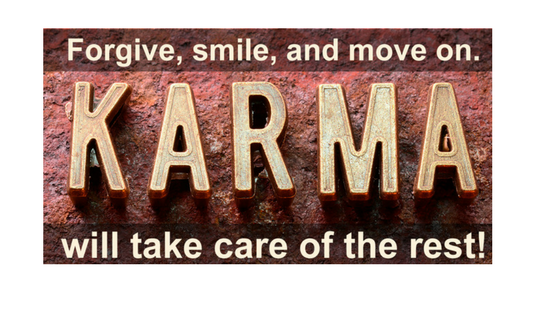
7 tips to keep your Karma clean

Keeping your karma clean

Definition of Karma

As per Indian philosophy, karma is the force that has the potential to cause people to reincarnate over and over again.  Hence, actions which are morally right result in pleasant reincarnations while non moral actions or actions which inflict pain and suffering onto others result in not so pleasant reincarnations.  Hence, how to we keep our Karma clean?  Below is a guide about what we can do.

Tip 1: Identifying your karma

It’s looking at areas where someone is stuck in.  If someone struggles with the same thing over and over again, it needs to be reflected on to identify where the problems lie.  We can check where the problems started and untangle someone from the karmic knots.  Reverting to the origin of the issue will help people to advance to their true potential.

Tip 2:  Severe toxic ties

Cutting off people who invade your field of energy with burdensome karma.  It’s about politely distancing yourself from people who bring more harm than good.  If someone’s energy doesn’t feel right, let go of the person.

Tip 3:  Take full responsibility of your life

Stopping to blame others for what is happening to us.  Our energy shifts when we admit our wrongs.  We try to do things differently the next time.  It’s not about feeling guilty or dwell in the past but consulting our karma when faced with a decision.

Tip 4 Heal your karma

People can perform actions that nourish our spirit.  They can learn to accept their karma and work with the universal cards they have been dealt.  Deeds can be done to counteract accumulated karma from long ago and contribute to wellness of the world.

Tip 5 Defying one’s weakness

It’s human nature to view ourselves as having weaknesses and strengths.  However, our weaknesses can be our hidden strengths.  They are part of us.  Healers help people to stop being victim and help them develop the courage to defy their downfalls and take the reins of karmic patterns.

Tip 6 Take new action

We need to change actions which do not benefit us.  Taking new action can help compensate all karmic debts and generate positive karma.  The highlight is that we need to strive to do good even we are not expected to.  It’s about taking care of ourselves and others.  We should act in ways we want others to act towards us.

Tip 7 Forgive everyone

Forgiveness frees us.  When we forgive, we detach from the anger, bitterness and frustration we have inside.  Bad karma feeds off anger and resentment.  It attracts people who feels resentment.  It’s our emotions that put us in negative cycles.

Much love, Geerish.

Correct Breathing

The importance of breathing

Correct breathing as a way of living

Breathing is the first thing we do when we are born as we inhale and it’s the last thing we do when we die as we exhale.  Oxygen and water are the two most important things that the body needs.  However, is breathing only important for the good functioning of the body?  In yoga and meditation, we can actually attain different levels of awareness through certain breathing techniques.  In this case, the use of breathing is beyond the needs of the body in a certain way.

Breathing is important for the correct functioning of the body as oxygen helps turn food into energy.  The lungs in the body take in oxygen to burn food into energy and release carbon dioxide.  Therefore, we rely on air for our survival and to be more precise, oxygen.  Oxygen feeds the cells in the body giving them energy for life.

What about optimum level of oxygen in the body?

We are going to use the analogy of a car to explain the optimum use of oxygen.  Just like a new car has a very good level of fuel efficiency, a fit body can absorb more oxygen.  It is also known that a body which is not overweight will also need less oxygen.  You may think of a car having less passengers in it. It will need less fuel to travel and the drive will feel very comfortable.  Hence, having a good diet, enough exercise and the weight well maintained are all very important to be breathing at an optimum level.  The breath should not be treated as something different from the body.  In terms of yoga, they are both one.  For example, in yoga, doing a set of asanas/postures calm down the mind and a calm mind usually helps us to do a series of asanas/postures.  From a broader perspective, the mind and the body are actually just one in that perfect yogic posture, hence the notion of oneness in yoga.

Having a healthy routine

You can have a healthy daily routine in the following way to keep yourself energized and relaxed.

Step 1:  Establish at least a healthy 30 minute daily workout which can be as simple as walking or a well-planned series of exercises, yoga or fitness training to give the body a work out.

Step 2:  Have a daily breathing routine.  Incorporate the breathing exercise I am going to teach below.

Step 3:  Have a full body relaxation with a guided body scan with a link to an audio file I have once again provided below.

Breathing exercise

After that you have done your 30 minutes work out, follow the following instructions:

  1.  Sit in a quiet place, turn off your mobile and make sure your back is straight.   Make sure that no one will disturb you for the next 45 minutes.   Perform the 4-7-8 breathing technique for 3 rounds where you breathe in for a count of 4, retain the air for a count of 7 and breathe out through the mouth for a count of 8.  I give a demonstration of this breathing technique on the following link:  https://www.youtube.com/watch?v=HVRtEoGb1-M&t=76s
  • Take very slow breaths in and out.  They are very slow breaths where each breath in or out is equivalent to 1 second.  For example, while breathing in, you could be counting 1-10 and while breathing out, you could be counting 1-10 again. It might take some time and practice to get it right.
  • Take 5 breaths in and out with both nostrils.  The 6th up to the 10 th breath will be breathing in through the nose but breathing out through the mouth.
  • At this point in time, you would be in a semi meditative state if you have done the exercise well.
  • Lie down and run the body scan meditation audio file on the following link: https://clyp.it/2qsqseid
  • The audio file can be downloaded for daily use as well.

Caution

As mentioned in the you tube video, we must not overdo the 4-7-8 breathing technique.  Why?  Breathing deeply brings more oxygen to the body and too much oxygen is called hyporoxia and this can damage our cells, leading to overproduction of reactive oxygen species (ROS) or free radicals.  Having too little oxygen is called Hypoxia and this is not good as well.  Hence, everything should be done with the right dosage and instructions well followed.

References:

http://sciencenetlinks.com/lessons/oxygen-machine/

I hope that you enjoyed reading it.

Much love, Geerish.

An introduction to Mindfulness

Getting back your balance

Dealing with thoughts

The main idea of Mindfulness meditation is about observing thoughts. We do not try to control, analyse or judge the thoughts that go through our mind. Instead, we observe them for exactly what they are. Thoughts do not control or define us. We learn to look at thoughts in a detached way. Most of the time, we think that thoughts are part of us and define us. What if I tell you that they are not?

Most of the thoughts that come to our minds come from whatever we are reading, watching or what people have been telling us. They can be part of our belief system, our upbringing or even education. Do they really define who we are? Are they part of our authentic self? Once we realise that thoughts are not exactly part of our inner being, we view them as just thoughts and we are freed from them in a certain way. It’s the best moment as a practitioner when students realise this the first time.

We do not ignore the thoughts though, no matter how disturbing they can be. In Mindfulness, we do not say that all is love and light and put things under the carpet. Well, it’s not what I teach anyway. We welcome the distracting thoughts, sensations or physical discomfort we are experiencing in the present moment and accept them.

We do so because whenever we resist emotions we are feeling in the body, we make things worse. It is totally fine to be angry, sad, vulnerable and so on. Acknowldeging how we are feeling helps us to know where we need to work on and gives guidance on where the knots are so that we are work on them.

In our my next blog, I am going to explore ways of increasing awareness through deep breathing and teach some simple techniques you can try on a daily basis.

Introduce Yourself (Example Post)

This is an example post, originally published as part of Blogging University. Enroll in one of our ten programs, and start your blog right.

You’re going to publish a post today. Don’t worry about how your blog looks. Don’t worry if you haven’t given it a name yet, or you’re feeling overwhelmed. Just click the “New Post” button, and tell us why you’re here.

Why do this?

  • Because it gives new readers context. What are you about? Why should they read your blog?
  • Because it will help you focus you own ideas about your blog and what you’d like to do with it.

The post can be short or long, a personal intro to your life or a bloggy mission statement, a manifesto for the future or a simple outline of your the types of things you hope to publish.

To help you get started, here are a few questions:

  • Why are you blogging publicly, rather than keeping a personal journal?
  • What topics do you think you’ll write about?
  • Who would you love to connect with via your blog?
  • If you blog successfully throughout the next year, what would you hope to have accomplished?

You’re not locked into any of this; one of the wonderful things about blogs is how they constantly evolve as we learn, grow, and interact with one another — but it’s good to know where and why you started, and articulating your goals may just give you a few other post ideas.

Can’t think how to get started? Just write the first thing that pops into your head. Anne Lamott, author of a book on writing we love, says that you need to give yourself permission to write a “crappy first draft”. Anne makes a great point — just start writing, and worry about editing it later.

When you’re ready to publish, give your post three to five tags that describe your blog’s focus — writing, photography, fiction, parenting, food, cars, movies, sports, whatever. These tags will help others who care about your topics find you in the Reader. Make sure one of the tags is “zerotohero,” so other new bloggers can find you, too.

Design a site like this with WordPress.com
Get started