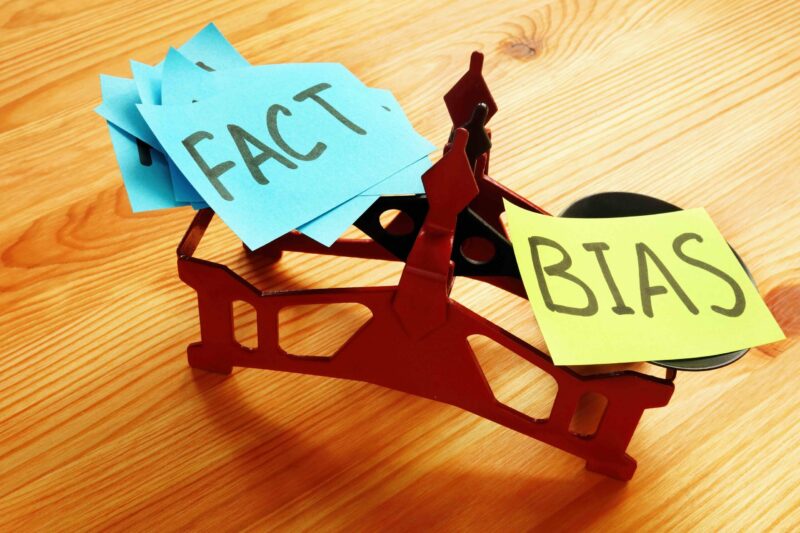
As an objectivist, I have always used Mathematics and logic to make sense of reality and not get trapped in the subjectivity of human perception. I still believe that it’s an amazing tool which can improve communication, bring peace and help humanity by evidence based solution free from bias. In this short article, I will introduce the main philosophies of Mathematics and look at where we are ruining such an amazing system with our own limitations.
Platonist and Non Platonist approaches
It’s important that we try to define Mathematics before we put bias in the equation. There are two categories of Mathematicians: Platonists and Non- Platonists. Platonists look at Mathematics in almost a romantic way. Mathematics is found everywhere and was always present. In fact, Mathematics is the essence of everything. Platonists believe that Mathematics was not invented and the whole existence is in fact digital, in a way. There are so many ways we can support this idea. Particles are probability distributions, there are patterns in nature and human beings are just an operating system using senses that take data, analyse and act. Non-Platonists think that Mathematics is a set of rules created by humans to make sense of the world. For non-Platonists the world would exist without Mathematics.
How do we balance both approaches?
Let’s say we bring a poet, an artist and a Mathematician in a room and we give each of them a sunflower. The poet will write about love, the beauty of the flower and mankind. The artist will appreciate the colors and textures. The Mathematician will conclude that the petals follow a Fibonacci sequence. Is any of the approaches wrong? I don’t think so. They are all ways of looking at the world and valid for the human experience.
Mathematics as the Pure and Impartial study
Let’s consider social sciences and Mathematics. Social sciences are about the study of people and their relationships in a society. It’s cultural and will vary across the globe. In Mathematics, we can solve an equation in any way we want if it leads to the answer. The same differential equation will be interpreted in the same way by all the different people in the world. In this way, Mathematics is a universal language. Mathematics isn’t affected by beliefs, feelings or the culture of a given country. However, there can be misuse of methods. For example, in data analysis, people can choose to ignore outliers or just use the mean and not comment on the standard deviation because it gives the right message. So, the problem is not the Mathematics in this case but the intent of the people using the Mathematics.
Mathematics, Big Data, Algorithm and Human nature
While Mathematics is unflawed, the results we may get after using Mathematics can be biased if the input data is flawed. We use Mathematics and Algorithms to crunch big data and make decisions. Big data is about massive data mined from the internet and analysed so that better decisions can be made based on consumer patterns and what’s really happening in the world. The three main sources of data are social data, machine data and transactional data. All seems perfect so far but let’s look at some results now. I am going to summarise results from Brown’s (2017) article on Forbes
- An online ad for “$200k+ Jobs – Execs Only” is shown to 1816 men, but only 311 women.
- Ads suggestive of arrest (“Trevon Jones, Arrested?…”.) are far more likely to show up on searches for names associated with blacks, such as DeShawn, than on searches for names associated with whites, such as Geoffrey.
- Gendered language in advertising subtly hints at employers’ gender biases.
Since the Algorithm only executes based on three sources of data mentioned above, it only suggests that we have an already flawed system with inadequate behaviour patterns as human beings. The machine is mining imperfection and providing imperfect results in a very perfect way. I’d conclude that Mathematics is still pure and impartial and it’s the human nature which isn’t as perfect as the Mathematics.
 Suuko's Spiritual page